Sunday, August 25, 2013

Beautiful Mendocino


My companion for the Pilgrimage show at Mendocino Art Center was Karen Campbell,
world traveler and business consultant from Vancouver, British Columbia.
After meeting at SFO airport car rental, Karen wove bravely through
the streets of San Francisco, taking us across the Golden Gate bridge
into Sausalito for lunch and her daily cup of espresso.

Wending up the Northern California Coast

At Santa Rosa we crossed to the coast to take the scenic route which,
following the coastline, had hairpin curves all the way to Mendocino.

Sky and ocean were worth the vigilance that the winding road required.

We marveled at the curious string of micro climates we met around each curve
in the road - moving from lush greenery to dry desert-like conditions.
When we reached Jenner by the Sea we stopped to rest. We felt assured
that we would reach Mendocino before dark and be able to find our airbnb in Fort Bragg.

Mendocino Art Center & Pilgrimage Show

Our first morning in Mendocino, Karen and I went straight to the art center
to check out the hanging of the show and leave books and cards for sale. 

Karen captured the marvelous mixed age range of Northern California
arts supporters as they arrived for the opening reception for Pilgrimage.

This appreciative viewer was fascinated by my small book on the pedestal.
It is composed of studies for the Maliwada, India painting on the back wall.

Attendees seemed to resonate with my description of the creative journey
being a zig zag path similar to Lombard Street in San Francisco.

In sharing some of the guidelines I used for the Pilgrimage series of paintings,
I gave people clues for how to read my abstract work

People in this area are well-traveled. Born and raised in Australia,
this lovely woman shared meeting her future husband on the boat to United States.

Do you think the woman in black is reading the Urdu writing in this painting?
It's the International Declaration of Human Rights.

Discovering Mendocino
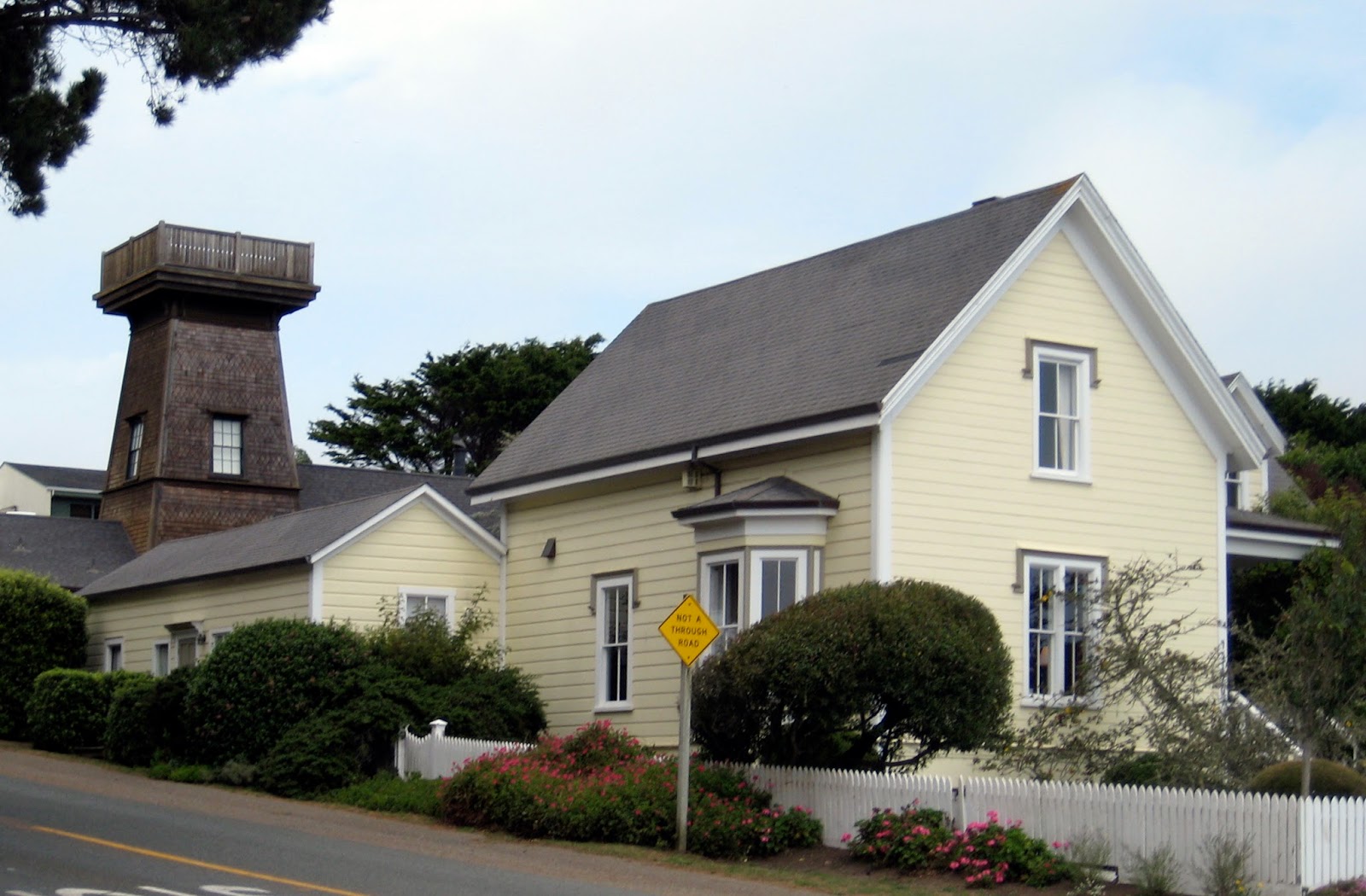
Former water towers are evident all over town. They have been transformed
into living quarters as residents no longer have to store water.

"Naked Ladies" are seen throughout Mendocino county.
They belong to the Amaryllis family.

Sandy headlands are reminiscent of Scotland and Nova Scotia.

Inviting beaches offer numerous sporting opportunities.

Gorgeous succulents are everywhere!
They thrive on moisture from the air.

Credits:
Pilgrimage Show and Mendocino photographs– Karen Campbell
Photos from car and collage – LiDoña Wagner

Sunday, July 28, 2013

Something More


Perhaps you’ve heard the term Encore Career, referring to what you do after you retire from your “real work”. Well, it doesn’t resonate with me. I don’t like the assumption that the big symphony has been played and now you get to do a little encore as icing on the cake. Nor do I like the image that your three act play has been performed and people would like to squeeze the toothpaste tube and get “just a little more” from you. 

What If?

What if, in fact, your “real work” is what you do after you’ve put bread on the table and raised a family? What if there’s something more inside you that has been brewing for a long time and has only now reached fruition and is ready to be expressed and harvested?

Maybe you’re familiar with the images of Maiden/Youth, Mother/Parent, and Crone/Senior Citizen. First you’re young and beautiful so you can attract a mate, then you’re middle aged and caring for others, and finally you’re an old hag - a rag hung out to dry. That’s one version of the three-act play.

What if life is not a three-act play with maybe a little bit added on for good measure? What if there’s something more than three acts or three stages of life? What if there are four or five authentic stages of life that, with good health, you are blessed to live?

LiDona Wagner July 2013
I once read an article in which the author claimed that creative aging involves continuing to take risks, even life-threatening risks, such as one took as an adolescent. Another characteristic is regular exercise – a health key at every stage of life. Another is continuous learning, opening your mind to fresh material so you don’t become stale and stink like aged cheese.

For a generation that came to adulthood during the depression, a generation that endured two world wars and for whom life expectancy was perhaps 60 or 70 years, retiring and having a few years of pleasure-seeking may have made a measure of sense. But for baby boomers and later, that scenario is a death knell to generative living.

What if scientists writing in the May issue of National Geographic are correct and some babies born today will live to be 120 years old? Will they be young for 40 years, middle-aged for 40 years, and senior citizens for 40 years? Somehow I don’t think so. There are ten-year cycles, fifteen-year projects, and even thirty-year adventures but really, forty-year cycles? What if what we have to teach the coming generation is the pattern of continuous regeneration? What if our legacy to the 120-year-generation is wisdom about the process of ending cycles and making fresh starts?

Embracing the Fullness of Being You

I choose to believe there is something more. I choose to regard life as a series of ventures, each with a beginning, middle, and end. When one venture is completed, a door opens on the beginning of a new one. This serial metamorphosis goes on for as long as you breathe and feel. That is, if you don’t lose your nerve and become frozen in old outdated roles.

LiDona Wagner July 2013
Beginning this fall, I am going to offer a series of seven Saturday workshops, one a month from October through April. Called Something More – Embracing the Fullness of Being You, the workshops will be an expansion of my former Creativity Is Your Birthright program.

The series will be built around seven principles of creativity: Vision, Gratitude, Decisiveness, Acceptance, Awareness, Beginner’s Mind, and Metamorphosis. We will have fun! Participants, even those with no previous art experience, will take home a product from each workshop. There will be personal and shared reflection. There will be assigned readings and homework, both serious and playful.

Something More will be a pilgrimage to seven sacred sites within, places of generativity, sources of creative living. On such a journey persons may come and go, but must commit to a minimum of two sessions. Price will vary depending upon the length of commitment. Let me know what you think of Something More.

Friday, June 28, 2013

To the Palouse and Back


The journey from Prineville, Oregon to Lewiston, Idaho and back was an awesome adventure. My friend Nadine Cobb, who lays claim to the “zen of driving”, drove the entire distance, around 700 miles. What a gift that was! It allowed me to soak in the incredible, majestic, monumental, and totally spectacular landscape.


Witnessing the mighty Columbia River beneath rock formations gouged by an ancient glacier thrusts one back through eons of time. On the other hand, the amazing sculpture of windmills harvesting the wind that whistles through the Columbia Gorge pulls one forward into the future. Feeling stretched between these two expanses of temporal reality, Nadine pushed onward toward the Southeastern Washington and Northeastern Oregon border. Witnessing the ethereal beauty in front of us, I fell in love with the Blue Mountains. 


Long Distance Brides
Vilas Tonape, Associate Director of the Center for Arts and History was the first to greet us in Lewiston. He shared photographs of his resplendent new bride, thousands of miles away in Mumbai, India. After leaving India nearly twenty years ago, he recently became a US citizen and his brave new wife will soon join him.


Friday evening June 14, at the Pilgrimage show reception, I had the privilege of meeting some amazing people: a beautiful young woman waiting and hoping for a kidney and pancreas transplant, her courageous and supportive mother, a former teacher who had taught in Shanghai at a school attended by future prime ministers of China and Taiwan, a quilt maker whose second time through The Artist’s Way has allowed her to say she is an artist, a versatile artist on the cusp of a career in book illustration, as well as a woman actively engaged in remaking downtown Lewiston.


As I made my way through the gallery, answering questions and sharing stories related to the Pilgrimage paintings, one of Lewiston’s senior citizens arrived. This petite 80-pound woman's perceptive comments and questions drew me immediately to her, but it was when we reached the Mexico painting, “Half Yet to Live”, that our bonding deepened.

I shared the experience behind my title and she said, “That’s not chronological, is it?”

“Oh no,” I said. “It can happen at any time. Have you had such an experience?”

“Yes. When I was 37 years old, living in Elkhart, Indiana, I became engaged to a widower from Idaho. He had two sons he had been raising alone since his wife died three years earlier. I had worked hard at jobs all of my life and he said he didn’t want me to work any more. He wanted me to be at home to help him raise the boys.

“He told his sons we were going to get married and brought the boys to meet me. They were eight and ten years old. The eight-year-old sat on a couch beside me and kept glancing at me. He got up from the couch and paced in front of me. Finally, he looked me directly in the face and asked, ‘Do you have any money?’

“I didn’t know what to say. I looked over at my fiancé and he covered his face with his hands. I turned to the boy and said, ‘No, I don’t have money.’

“The boy paced a bit more. When he sat back down on the couch, he said, ‘Well, I guess we have enough chores that you’ll be able to earn your keep.’ “

The two of us roared with laughter and her blue eyes sparkled. I realized that for three years the widower must have been telling his sons they had to do their chores in order to earn their keep. Now, as he courted his future wife, his saying had come home to roost.

Hearing our laughter, others came to join us, but not before storyteller Leila Lockhart whispered, “Later we became playmates when he discovered that I could climb trees.”


Creating Community
When Nadine and I decided to travel to Lewiston for the opening of my Pilgrimage exhibition at the Center for Arts and Culture at Lewis-Clark State College, I had no idea of what to expect. Our arrival in Lewiston launched us into an amazing opportunity to witness the transformation that is taking place in small inland communities.

After checking into our hotel in Lewiston, we went for a walk. We discovered a newly opened library behind the Center for Arts and History, along with recently installed highly colorful public art that served as bike racks and seating. Across the street and in front of the art museum was another newly renovated building called the Towne Square with eateries, offices, spaces for musical events, and upper storey apartments.

Next morning we walked on the “green belt”, a newly constructed walking and bike trail along the waterfront of the Snake and Clearwater Rivers.  Not only did we have tremendous views of water and hillsides, metal exercise equipment located along the trail was available for us to stretch our muscles.


By the time we met Cathy Martin at the Pilgrimage reception, we had already picked up clues about Beautiful Downtown Lewiston initiatives. Using federal funding, the town is clearly remaking itself. Located in a banana belt, I suspect it will become a destination for retirees.

Leaving Lewiston early Saturday morning, we made our way thirty-some miles north to Moscow, Idaho. Here young people with college educations have decided to raise their families and are into creating a kid-friendly downtown, evident in a child focus at the bookstore, art classes for the young, cartoons at the cinema, and baby strollers throughout the popular Farmers Market.  With vim and vigor, these young families are reinventing the old Western tale of “making a town”.

After breakfast at the Bloom independent art house and café and a quick visit to Pritchard Art Gallery, we began our return journey west. With no deadlines to meet, we decided to stop and meander around Walla Walla, Washington before crossing into Oregon. 


Driving toward Lewiston we had seen many of the carefully tended vineyards that have made Walla Walla a destination for wine enthusiasts. In downtown Walla Walla we could see the financial impact of those enthusiasts. There were wine-tasting shops galore. The historic hotel where Nadine was hosted as a rodeo queen years before had been renovated in an elegant European style. Strolling down gentrified streets, we ogled at the cool clothes in Studio Opal. With patterned leggings, dainty lace tops, a zillion sunhats from China, and striped all around long dresses, it was definitely for the younger set.


Saturday afternoon we crossed into northeastern Oregon. Nadine had graduated from Hermiston High School, so we lunched and bought gas in Hermiston. Having left Idaho and Washington behind, it was clear that wealth from wheat farms, vineyards, and inland ports had not made it into this part of Oregon. But the landscape all the way to Madras, Prineville and Bend, punctuated by snow-covered peaks from the Cascade Mountains, continued to be breathtaking.

Singing Bird B and B

Going to and from Lewiston, I had the delight of staying two nights in Nadine's home, a bed and breakfast in Prineville, Oregon that is perfect for the genteel nature lover.


Every corner holds an art treasure, from kitchen to bath to laundry room to entry and bedrooms. And Nadine is qualified to lead hikes, horseback rides, and guided tours of the stupendous landscape as well as gallery walks in nearby towns.


Try it. I bet you'll like it. ncobb@coinet.com


Collage Art Images: Karen Bandy, Richard Boyer, Brenda Reid Irwin, Alison Meyer, Susana Santos, Craig Zuger.
Photos: Vineyards from Google Images, rest by LiDoña Wagner 

Thursday, May 30, 2013

Honoring Our Maternal Heritage in Chico, CA


To celebrate the completion of their new sanctuary, my friend Petie Padden and their program chairperson organized an awesome array of Mother’s Day weekend events for the Unitarian Universalist Fellowship of Chico, California. I was honored to exhibit framed prints of my Pilgrimage series, conduct a Dream Mandala Collage workshop, give a presentation on Pilgrimage, and do the Sunday sermon on Honoring Our Maternal Heritage. The weekend began on Thursday, May 9.


Our spirits soared as Petie drove south on I5 after picking up my artwork and me in Eugene. We took in breathtaking views of the Willamette Valley with its tree-laden rolling hills, farmland, and surrounding mountains. Stopping in Ashland, home of Oregon’s Shakespeare Festival, we had lunch at a peaceful creek-side restaurant. 


It was fun to pass shop windows filled with funky do dads that no one really needs but that make you smile nonetheless. But the real treat was seeing current work at Howard Hanson and Davis & Cline galleries. My soul was fed by exquisite design and carefully honed creative expression.


Arriving in Chico in early evening, Petie catered to my desire to experience Chico. Weaving through tree-lined streets, she took me to a delightful organic restaurant for soup and salad. Next morning we went on a walk in Chico’s extensive Bidwell Park. The park feels as though it completely surrounds the town with upper and lower sections that contain both wetlands with heavy vegetation and dry lands where the sky is wide open. With its numerous trails and amenities, in many ways it is the heart of the community.


Friday evening, Petie indulged me with a tour of downtown and introduced me to the campus of Chico State University. Besides the youth-oriented places typical of a collage town, I was taken with a recently renovated art deco building and the architecture and sculpture on the campus. Saturday morning the treat was Chico’s farmers’ market.

Each show has its unique hanging challenges, from crooked walls to cathedral windows and glass partitions to racks of olive oil containers. In the UU sanctuary the challenge turned out to be a hanging system for fourteen items while I had twenty-one. Two fellowship members assisted us and fortunately one of them had brought enough easels to make up for the missing hooks. Kudos to Petie for being the brave person who ascended the ladder!


Next up was preparing for Saturday’s Dream Mandala Collage workshop. Three weeks before the workshop, I began developing a construct that would reduce my 18-month or weeklong mandala classes down to a one day workshop. As my plan evolved, I had a dream that included this segment: “I decide to comb my hair with my fingers the way I have seen women do on the bus. It is long. I pull all of the top hair into a spiral knot. I make a spiral knot above and behind each ear. “ I did my own dream mandala collage so I could more easily guide students in making theirs.


What fun we had! Participants brought amazing dreams with powerful images such as castles, spies, horses, split rail fences, mysterious objects hanging in trees, solar flashlights, and radiating dances. After sharing in a dream circle, it was wonderful to see how individuals found magazine images not just for themselves but also for others.  Actually placing the images in their circle is where integration of the dream message occurs.


One person was at a life turning point and we decided she would do a vision, not dream, mandala. Focused on who she is becoming, the image she put at the center was of a path into the future. As we shared and reflected together on our mandalas, the support for each person’s journey was palpable. Next time I do this workshop I will call it a Dream or Vision Mandala Collage. 


Saturday evening, after a quick trip to Petie’s for a wardrobe change, we returned for my presentation on Pilgrimage at a reception for the show. It was gratifying to have persons from the workshop come back and join others for the evening. My presentation is filled with images of the creative process and stories of some of the villages in which I have lived and worked. Those attending had marvelous questions that we carried on into a full discussion as we munched on all the goodies Petie and others had brought.


To set the tone for the Sunday morning service I led a conversation with the children in the congregation. Using a print of Rift Valley Origins, I brought out the fact that every child that is born carries a heritage that goes back hundreds of thousands and even millions of years. That heritage passes through Homo sapiens 200,000 years ago, through Australopithecus (Lucy) 2.5 million years ago, through Ardipithecus 4.4 million years ago, all the way back to a common primate ancestor we share with gorillas.


Petie did a reading from Wade Davis’s “The Way Finders” about the fact that contemporary science shows “race is a fiction” and “We are all literally brothers and sisters. We are all cut from the same genetic cloth.” My talk centered on Rebecca Kahn’s scientific breakthrough in genetics, tracing all people back to one woman in East Africa 170,000 years ago, Mitochondrial Eve. After describing the journey our ancestors made from East Africa to all corners of the globe, I shared copies of the prototype for Eve’s Imprint exhibition. I gave the context for the traveling exhibition and then opened for questions. I appreciated the respect with which members of the congregation corrected some of my language and brought out the importance of art and science going hand in hand.


Art Work: LiDoña Wagner
Photo Credits: Willamette Valley & Bidwell Park – Google Images, Rift Valley Origins – Walt O’Brien, all others – LiDoña Wagner


Saturday, April 27, 2013

Meeting with Asphalt


Easter Sunday. The sun is shining. I’ve completed my March blog just before the deadline. I’m eager to plant more flowers in the garden and I need a few groceries. So off I go to the local market.

Heading home with a backpack full of groceries, including a dozen eggs, I am excited about the flowers I’m carrying in each hand. Two blocks from home, I check the traffic as I step with momentum off the curb. Ahhhhhh! Ohhhhhh! Crack! Owe!

The curb being twice as high as it was two feet earlier, I have flown through the air and landed, both arms extended, on my left shoulder. Strapped into the backpack, my upper (humerus – but not funny) arm bone has taken the brunt of my momentum hitting the asphalt.

The sports convertible whose progress I had marked as I stepped off the curb slows and stops. The middle-aged blonde female driver advances. “Do you think you need medical attention?” I hear a disembodied voice speak from the pavement. “Yes, I think I broke a bone. I heard it crack.” “Just a moment while I park my car.”


A man on a bike has also stopped. They help me to the curb and remove my backpack. I have chills and am sweating. “Where do you live?” “Right down the street. Can we take the groceries home and then go to Urgent Care?” “Sure.”

My Good Samaritans put my packages into the sports convertible and help me into the passenger seat. I am holding my left arm with my right, trying not to scream or cry from the pain. The driver's name is Debra. We arrive at home. Debra unloads the groceries, observing that not a single egg has cracked or broken. I’m thinking it would have been nice if my left arm and shoulder had been packed safely in my backpack.

“You live alone?” asks Debra. “Yes.” “Then I need to take you to Urgent Care. You’re in shock.” “Weren’t you headed somewhere before you stopped?” “Well, I was thinking of going up to the Skagit Valley for the tulip festival, but the tulips will be there next week.”


My Good Samaritan took me to Urgent Care, filled out the paperwork since my glasses had broken in the fall, waited while they took Xrays, confirmed that the humerus bone had two cracks, gave me a sling to hold the arm and some narcotics to ease the pain, handed me a prescription for eight sessions of physical therapy to begin in eight days, said to see my regular doctor in a few days, and then she graciously helped me back into her car and took me home.

Thank you. Thank you! Thank you. Debra would not give me her last name or phone number so all I could do was ply her with thanks as she headed off to a barbeque at a friend’s home. I entered my home to begin a six-week to six-month journey as a one-armed fool.