Sunday, June 22, 2014

Self-Portrait In the Moment

Opening Reception for In the Moment at Maude Kerns Art Center

Two years ago I was invited to be part of a group show that would be self-portraits by twenty or more women artists. One requirement was that each artist had to do her work in the six months prior to the show. Our curator, Lo Caudle, began convening sessions to be sure that we all understood the ground rules. To be fair to each artist, it was determined that each of us would have eight feet of wall space. During the six months of creation, Lo hosted monthly sessions at her home to keep us all "in the moment."

I was one of ten artists who had photos ready in time for the invitation card to be printed, whew!
The show opened on Friday, May 16, 2014. Since it was two weeks before the final day at my university job, I was in a celebrative mood. I purposely wore a red shirt and "crazy creative leggings."

I welcomed my first guests to Maude Kerns Art Center:
Puppeteer Bob Kamenski and his dog.
My friends Ginny and Kate were already inside viewing my stabile (hanging sculpture).
My three pieces were front-left in the gallery: self-portrait triptych, ancestral journey stabile (hanging sculpture), and creative process accordion book.

University colleague Gil James took time to read my accordion book.
As the crowd gathered, I delighted in greeting Kathleen R., Renee, Eden,
Lillian, Kathleen H., Susan, and Linda.
Lo Caudle, our amazing curator, was also one of the exhibiting artists.
17 of the 20 self-portrait artists were at the reception and received roses.
One of the artists brought a photographer to the opening.

LiDoƱa Wagner Self-Portrait 

My self-portrait triptych, composed of three 18" x 24" wooden panels, was my largest piece. At Karen Synder's recommendation, I attempted to make it life sized.


Very early in the creative process I determined that I wanted to use maps. Ancient and contemporary world maps reflect my thirty years spent working in impoverished communities all over the world. For my body I used a National Geographic map of the oceans (blue water and black continents), 14th to 18th century maps showing changing perceptions of the world, and strips from a Doctors Without Borders map. To create a sense of antiquity, I did transfers of old maps for the deer and goddess. Gold foil once served to wrap the chocolates I love. Violet concentric circles represent the spiritual realm where I make contact with my ancestors.

The deer represents my maternal heritage, the 41% of my DNA that matches that of people in Denmark. Hand spirals represent the 40% of my DNA that matches that of people from Tuscany, my paternal ancestors. Goddesses symbolize the 17% of my DNA that matches that of people from Southwest Asia (the Near East) where both my maternal and paternal ancestors spent a long time before traveling north through the Caucasus and west along the Mediterranean Sea. The black fanny pack, shoes, and hair symbolize our One Black Mother, Mitochondrial Eve, from whom we have all descended. I am all of this and more that is yet to be discovered.

Michael Fisher, Maude Kerns Art Center exhibits director, did a wonderful job of
arranging my accordion book for maximum visibility.
Rather than putting out my sketchbook, which includes a lot of source material, I decided to create an accordion book that would show key stages of creating the triptych. Using photocopies of pages from the sketchbook, I also shared reflections that occurred during the evolution of the triptych. 

Yes, I did selfies to arrive at the chosen position for the self-portrait
and I made lots of mistakes in executing it.
Before October 18, our beginning date for self-portrait creation, I had never done a selfie or used Photo Booth on my iMac or Mac Book. In doing my first selfies, I discovered something called four quick shots. By the time it got to the fourth shot, I could be in a test position. After many attempts I selected one that had a lot of triangular shapes.

The deer turned out to be a challenge. The tar gel I used for map transfers on the deer clouded when it dried. Thinking of how you use oil to make a rock look wet, I tried rubbing the surface of the deer with Olive oil (no luck) and teak furniture polish. Whether it was all of the rubbing I did or the teak furniture polish, I succeeded in bringing back the ink colors transferred from the maps. I used heavy gel for the map transfers on the goddess and had no problem with clouding.

My daughter, Kendra Jael, was very much present as I worked on
my self-portrait triptych and ancestral journey stabile.
Every life is marked by seminal events. Who would have guessed that when my daughter Kendra was admitted to the school of the Museum of Fine Arts in Boston, it would change my life dramatically? My first art classes were taken solely for the purpose of being able to understand what she was doing and to be able to discuss it with her. Unwittingly, she pulled me away from writing and into painting. Ten years after her death I realized that she had become my ancestor. She is my connection to all of our ancestors.

Note the turning of the ancestral stabile.
The creative process often goes on long after one has met a deadline. In talking at the reception with children's book author Judy Sierra, I not only discovered that two pieces in the stabile were out of order, I also realized that since the stabile reflects my DNP mapping, it needed to spiral as does the DNA molecule. Soon after the reception I returned to the gallery to get the pieces in the right order and to spiral the stabile. I think the spiraling needs to be more incremental than I did it this time.

There is a vignette and date on one side of each stabile box.
Each vignette marks one of the major migrations made by my maternal ancestors.
I was very clear when I began my self-portrait that my concept of self includes all of my ancestors. How could it be otherwise since my only child is now one of those ancestors?

Early in 2010 I did my maternal DNA testing through the genographic project of National Geographic. Later that year one of my brothers did our paternal DNA testing, also with the genographic project. In receiving the results of the tests, we also received marvelous maps and material on the most likely migrations made by our maternal and paternal ancestors, along with online information on ecological, cultural, and historical events of each era.

During 2011-2012, I painted a heritage mandala. In the narrative ring I painted a vignette for each major stage of my DNA journey. However the complexity of the mandala diminished the emphasis on the DNA journey. I decided I wanted to do something else with the vignettes. When I first began working on the self-portrait, I planned just to have eleven boxes arranged on a pedestal. However, I wanted to have something on both sides of the boxes and that would make it difficult to see both sides no matter how I arranged them on a pedestal. Thus was born the idea of having the boxes hang so they could be seen from both sides.

One side of each box is a visual representation of one stage of the DNA journey; these are the vignettes from my heritage mandala. The opposite sides of the boxes and the loops between the boxes provide verbal clues to that stage of the journey.

Something of a sculptural book, there are verbal clues to events
 of each era on the opposite side of each box in the stabile.
 I intended to create an accordion book showing the progression of the stabile, but ran out of time. In brief:

  • scanned and photocopied the vignettes from my heritage mandala
  • glued the vignettes to 4" x 4" squares of mat board painted green
  • created verbal clues for each vignette 
  • made several attempts at a prototype box
  • decided on the colors for and painted eleven 4" x 4" canvases 
  • lettered and painted two layers of writing on each canvas, the top layer in copper
  • collected locally and via the internet a variety of screw eyes for linking the boxes
  • gave up on finding copper screw eyes strong enough to hold the weight of the boxes
  • elected to shift some of the verbal clues to paper loops that would hide the screw eyes
  • found and then decided not to use small wooden letters down the sides of the boxes
  • moved the side messages to a new "title box" at the top of the stabile 
  • decided to use raffia as a second means of connecting the boxes, add side interest, and to give a natural element

For myself and many of the other 19 self-portrait artists, the six-month creative journey pushed us to try things we had never done before. My triptych is the largest painting I have ever created. Only by breaking it into three pieces could I create something that size in my small studio. While my stabile is really a sculptural book and somewhat primitive, it is the first sculpture I have ever made. And though I have been experimenting with accordion books in recent years, it took humility to be willing to exhibit such an unpretentious one in a gallery. 

I wonder how the experience of creating these three representations of "who I am now" will affect my work during my October residency in Assisi, Italy.


Saturday, May 31, 2014

New Life Begins

Thank you to everyone who helped me celebrate the conclusion of 14 years of work as an administrator at University of Oregon.

Presentation of College of Education Officer of Administration Award
Two weeks ago my colleagues surprised me. The Dean of the College of Education, Mia Tuan (the woman with the short dark hair), interrupted a team meeting to present me with the college's 2014 Officer of Administration award. You can bet that the energy behind this came from the woman in turquoise and the one in the black sweater. These two extremely capable women are excellent writers and experts in human relations.


Side window by the front door  of my home.

A week ago, my neighbor Laurel began posting countdown numbers on the window beside my front door. Each day a new number appeared. As I began bringing things home from the office, I found a small calendar with photos of the College of Education. I cut out the photos and mounted them above her stack of posits. On Thursday night I cut the photos into the word "DONE" in preparation for my last day at UO.

Window of my office door.

Ten weeks ago friends suggested that I put a countdown outside my office door. I mounted a UO duck swimming away and showed ten weeks until the final lap. Each week I covered another week until yesterday when I moved things to the window of my office door. After delivering thank you cards to colleagues who have been part of my work community, I tackled the final tasks of my job as coordinator of the initial administrator licensure program. I could not have made it out as smoothly as I did had it not been for my friend Kathleen Richter who in two hours wiped away a series of niggling tasks such as scrubbing my name from the program website. Yesterday was also Kathleen's last day as a student employee at UO as she will graduate on June 16.


Flowers and cards from friends on my table at home.

At three o'clock yesterday afternoon, a florist delivered flowers from a group of my "met at the university" friends. At five o'clock, one of these bosom buddies arrived to escort me out of the office and whisk me to a favorite restaurant to join the others. Exhausted but happy, I shared in a wide-ranging conversation, unrelated to the university. The varied interests and passions of these women are what I love about them.

This morning I completed the transfer of my computer files to a site accessible to my (now) former workmates. I cleared the remaining objects, wiped the office window clean, and made some recommendations for orienting my replacement. This afternoon I took a victory walk during which I rehearsed many of the actions that I will never again "have to" perform.

A new life has begun. Thank you to all for your cards and messages of encouragement. Transitions are necessary but hard. Friends are the ballast that help you navigate the rough waters. I am grateful to have been blessed with amazingly caring friends.


Tuesday, April 22, 2014

October in Italy

-->
Historic Hill Town of Assisi, Italy
I am excited to announce that I will be doing my first artist residency in Assisi, Italy during the month of October. Arte Studio Ginestrelle is located in Regional Park of Mount Subasio, a UNESCO Heritage Site in Umbria, the “green heart of Italy.” Assisi is the birthplace of St. Francis, founder of the Franciscan order. Assisi contains famous frescos by Giotto and Cimabue.
Map of Italy Showing Location of Assisi

What is an artist residency?

A residency means that an artist goes to a particular site for a specific period of time to work on an artistic project that has personal or site-specific meaning. Generally several artists are working at the site simultaneously, either in individual or communal studios. The following gives you a sense of this. 
Arte Studio Ginestrelle in Regional Oark of Mt. Subasio

Aims of Arte Studio Ginestrelle

·      to promote contemporary art in all its diverse forms within an international context
·      to stimulate creativity through direct contact with nature and a respect for the environment
·      to set up an exchange of ideas within various disciplines of contemporary art practice
·      to establish workshops, exhibitions, and open-air art events in the Regional Park of Mount Subasio

View from Balcony

Each artist will have the opportunity to develop his/her project within a number of different artistic fields:

·      Visual Arts painting, drawing, photography, installation art, land art, sculpture, etc.
·      Literary Arts fiction, poetry, script writing, novel, short stories etc.
·      Performing Arts dancing, music, drama. Work can either be done in the studio, within the residency, or outside in one of the two refurbished barns that have been adapted as work spaces.

How does one get an artist residency?

As with most advanced artistic opportunities, there is an application process. This includes an application form, a CV or resume, a project proposal, and most importantly, images of one’s art. There is usually a deadline that allows for a board, committee, or jury to meet and review the applications. After ranking the applicants, they decide to whom they will award a residency.

What will I be doing?

My time in Arte Studio Ginestrelle will be focused on conceptualizing and beginning the environmental pieces for EVE’S IMPRINT: A Global Family, my large visual arts project that traces our human journey from East Africa to all parts of the world.  Many human migrations were intimately related to environmental events. Thus as I envision the Eve's Imprint exhibition, there will be eight artworks that depict ecological and environmental events. 
I cannot say how much I will finish in one month, perhaps one of the eight pieces. I generally work on several pieces simultaneously; so quite likely during the residency I will have begun at least two or three pieces. I keep detailed sketchbooks and document as I go, so I can assure a minimum of two or three process-oriented accordion books for display.
I am a visual and experiential learner. I feel that living in the region of Mount Subasio and having access to the Geo-Paleontological Museum and those who work there will stimulate the ecological and environmental artworks for Eve’s Imprint.  
Church in Assisi

Is it all work and no play?

In addition to our studio work, we will have a chance to participate in cultural activities such as walking the trails of the park, visiting ancient churches in the area, going to the grotto where St. Francis lived, and seeing paintings by Giotto, Cimbau, Lorenzetti, Sermei, and Giorgeti, etc.
In early December, all of the artists who have done residencies at Arte Studio Ginestrelle in 2014 will have work in a show at Art Gallery Le Logge in Assisi.  Our work will be published in the International Contemporary Art Guide supported by the Council of Assisi. 

Art Gallery Le Logge

How did this happen?

Lest you think this opportunity just magically fell into my lap, in next month’s blog I will share the journey I have taken from putting out my antennae eight months ago, to seven months of soul-work in Something More, to six months of work on a self-portrait, to pushing through rejection by my first chosen site, and then reconfiguring to submit to Arte Studio Ginestrelle.  

Hill town of Assisi, Italy

Photo credits: Studio, View from Balcony, and Gallery from Arte Studio Ginestrelle; Others from Google Images

Thursday, March 27, 2014

Transition Time

-->
At the end of May I will leave my administrative job of the last fourteen years in University of Oregon’s College of Education. I am leaving in order to devote more time to my current body of artwork, Eve’s Imprint: A Global Family. I find it interesting that even though this is something I very much want to do, nevertheless, because it is a big change in how I will order my days and with whom I will be connecting on a regular basis, it brings a lot of mixed feelings.

When I left the Institute of Cultural Affairs after thirty years of service I felt that I had my whole life ahead of me. When my marriage of 23 years ended, I knew that I needed to discover who I was as an individual. When I said a final goodbye to my daughter after 35 years, I kept focused on assuring a continuity of love for her two daughters. Somehow this upcoming loss and departure feel different.

Perhaps it is the age at which I am making this transition that the stakes seem high. Perhaps it is residual self-doubt about myself as an artist that makes the future seem uncertain even though I know I will be spending hours in the studio every day. Perhaps, after all of my losses and leavings, it is time to consider my legacy to planet earth. What, if any, mark will I leave?

I invite your reflections on life transitions. How have you celebrated and coped with them?

I invite your reflections on leaving a legacy of love. How are you approaching it? What has been helpful in your process?

Below are two pieces of wisdom I’m currently contemplating.

Sept 9, 2011

Know What Matters
To start purposefully creating your legacy, think about the following three questions. I've used these questions myself and have given them to my clients to think about and answer. They will rock you to your core. Answer them honestly to create a legacy that matters and endures.

1)    Twenty-five years after my death, what, if anything, will those beyond my family remember me for?
2)    If I had to give everything I own to a cause (not a person), what would that cause be?
3)    If I could snap my fingers and acquire an experience or talent, it would be ___________ because ___________ .

While on the surface these questions may sound simple, when it comes time to answer them you'll realize that each question requires much thought. In fact, most people have to think about the questions for days before really knowing the answers.

Remember, it's not what we leave FOR others that matters; it's what we leave IN them that matters most. Possessions and wealth do not a true legacy make. It's about leaving behind the essence of your Authentic Soul. That's what the world needs from you. So serve others by leaving behind the best and most beautiful parts of you. Today and every day, create your legacy.

Craig Lucas: Leaving Your Artistic Legacy

The following is from a commencement address Craig Lucas delivered to the graduates of the Boston University College of Fine Arts in 2008.

By all means, earn accolades, find fame and fortune, and when the world falls at your feet, just don't let them tell you what to do next. Just don't let them make you do the same new thing over and over. The world is full of artists who literally painted themselves into a corner. No one should have to write the same play twice.

Learn that most magical of words, the one that will open the most doors, command the most respect, and free you from the tyrant within and without:

No.

If all we do as artists is make people feel, that alone can subvert some of the cynicism and indifference being peddled.

By feel, I don't mean that warm glow audiences get when they're told how smart they are and everything is fine just as it is; that warmth is nothing more than the fever accompanying the disease that is killing them. That's called pandering and people will pay an awful lot for that; and so will you. You really can ask more of yourself and your audience.

That's the hope I want for you.

We began, as artists, tens of thousands of years ago, by putting our hands to the walls of the caves and leaving a handprint: "I was here! This is what it was like! These arrows, these animals, this blood."

That is still our job.

Friday, February 28, 2014

Creative Enrichment


We arrived at the fifth session of my Something More series of creativity workshops before I remembered to take my camera. So this is the first time I can share pictures. Perhaps it was because we had passed the halfway mark that I found myself beginning to discern some lessons. Here are a few. I’m sure more will come as we begin to reflect on the full journey.

Making the base for each other's Empowered Me mask was an intimate experience.

The sewing circle dynamic is enriching.

I think what women appreciate most in our Something More sessions is the opportunity for individual and group reflection. Working and raising families, contemporary career women have few opportunities to pull aside and get perspective. When I give them an exercise for writing in their journals, they are often amazed by their own wisdom. When I guide a reflective conversation, they experience support and affirmation. And the informal conversation that occurs while working on their own projects is nurturing. 

Whether it was a quilting bee, cooking for a harvesting crew, or canning fruit in a neighbor’s kitchen, women in earlier times found that being creative together not only made the work go faster, it generated fruitful discussions. The projects women create in Something More have been chosen because they nurture a woman’s soul. Doing them within a circle adds social meaning to the project.

The large conference table at Ophelia's Place is ideal for conversation and creative projects.

Give more time for projects.

My biggest discovery has been that most of the projects I have designed for this series require two sessions rather than one. Participants attend the workshops because they need designated time away from distractions to work on their creative projects. Few are in a position to go home and take their piece to the level of completion that makes them proud of what they have created. They need to take the project to completion within the workshop time. The companionship they experience in the workshop sessions spurs them on.

This discovery has led me to see that next year I will need eight sessions instead of seven. There will be introductory and concluding sessions plus two sessions each for the Dream Mandala Collage, Future Vision Accordion Book, and either an Empowered Me Mask or I Heart You Folk Art Doll.

Women find that working on a creative project reminds them of how creative they were at other times in their life.

Always get the best materials. 

Years ago when I first began studying art, one of my teachers told me that if you want quality results you have to use quality materials. Apparently I needed a reminder. Watching one student’s lovely pastel drawing get smeared I realized I had not provided proper pastel paper. Likewise a couple of students used colored pencils that did not show well on the paper I gave them. So, in future classes, I will ask students to buy a small pack of Caran d’Arche watercolor crayons. These crayons work on many surfaces, are easy to draw with, and when one brushes over them with water, they yield strong color.In another session, I provided students with a cheap form of sticky tack. It was too sticky for the magazine pictures we were using and tended to cause tears when pulled from the pictures. 

Now I will ask students to buy UHU Tac, a more stable putty that pulls easily from surfaces. I will also insist that students buy YES glue for their collages. Though more expensive than Modge Podge (which shopkeepers tell them will work but it really won’t), YES glue does not wrinkle paper, has no smell, and does not turn yellow with age. Glue sticks are not permanent; the glue dries out and your collage falls apart.

You need quality materials to get quality results.

Demonstrate Processes and Materials.

I have discovered that I take many things for granted. Students want to be shown how to use the watercolor crayons, sticky tack and YES glue. I’ve been using these materials for so long, I was not aware of how strange they seem when first encountered. In the case of the mask and doll making, I did not take things for granted. I helped the mask makers with set up and we talked through the process before they began. With the doll makers, I spent a lot of time creating a simple pattern and a sample for cutting out the body. I will be asking my current group of students to tell me what they would have liked for me to demonstrate.

For the Folk Art Doll, I spent time creating a pattern and sample that made the process very clear.

What are you learning these days?

Saturday, December 21, 2013

Solstice Blessings


Wondrous Winter Solstice 2013

Star of wonder in the night
Star of hope-filled light
Star with love shining bright


Infinite annual cycles
Bring sun's blessing
Down to earth


Message in our blood
Around the world
We are one


Sands of Time
Awaken
Zen of Openness


Enter the temple
Strewing flowers
To honor Goddess Gaia


All is Good 2014 

Images: LiDoƱa Wagner Tea and Me series


Friday, November 29, 2013

A Healing Journey


First Things First
Easter Sunday, walking at a rapid pace and not being present in the moment, I misjudged a curb and flew through the air to land full force in the asphalt road. Arms outstretched to break the landing, I fractured my upper left arm near the shoulder.


With horizontal and vertical cracks near the top of the humerus bone, the orthopedists were concerned that the top of the bone would break off and then things would be very serious. The best course of action was to immobilize the arm in a sling belted to my waist for one month to give the bone a chance to heal. They assured me that if I did this, I could expect to recover 80% of my previous use of that arm. 
No one spoke of the trauma’s effect on the rest of my body or my psyche. No one spoke of the effects of immobilization on all the muscles and tissues of my arm, shoulder and side body. There were no references to other health practitioners.

Arm straped to my body, I adjusted computer setups and sleeping and bathing arrangements and mastered pain management so I could continue working. I gave up my yoga practice but managed to keep up a walking routine. With one goal emblazoned on my mind, immobilizing the arm to prevent displacement of the top of the humerus bone, I ignored the seriousness of what had happened. In typical grin and bear it fashion, I pretended everything was as it had been before, except that I was functioning with one arm.

Whole Body Experience


It was not until permission was given to take off the sling, that I began to realize that such a harsh fall is a total body experience. I was given a prescription for physical therapy, but my preferred provider was away getting married. Awaiting her return, I became aware of tension throughout my body and in my approach to life.


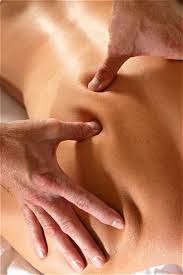
I arranged for a full body massage and was fortunate to be scheduled with a woman who had a wide repertoire of techniques. She found myofascial release most effective in getting my body to relax. Under her gentle touch, I felt pain and tenderness in oh, so many muscles! The trauma of impact came to the surface and all of the tears that shock had prevented me from shedding began to flow.


After a few massages and physical therapy sessions, I became conscious of a persistent ache in my chest, near the breastbone. Someone suggested that a rib might be out of alignment. Bingo! Of course the ribs had suffered from the impact. So, off I went to a chiropractor. Sure enough, once he had tapped a rib back into place, the chest pain was gone. He gave me a prescription for manual therapy – myofascial release – to supplement my bi-weekly physical therapy sessions.

Use it or lose it is absolutely true. I was in continual astonishment at the number of muscles and fascia that have to be urged into functioning again. I am convinced there is a way to immobilize a bone without making muscles stop their normal functioning. For example, a dissolvable substance could be injected into bone fractures. As the bone began to heal, new cells could displace the substance and make it dissolve. Or a net made of dissolvable threads could be spun around the bone. The threads would be timed to dissolve as the bone healed. All of this would require microscopic surgery and unfortunately surgery is very hard on the body. So maybe we’re stuck with the archaic practice of letting muscles atrophy in order to allow a bone to heal properly. 

Honoring Client Goals
I am blessed with an amazing physical therapist. Right off the bat, I announced that 80% recovery was not good enough. I needed 95-100% recovery for my art, gardening, and yoga. Her response was, “OK, let’s see how far we can go!” Of course, I have to do my part. When she gives me exercises, I have to be faithful in doing them.

As we came close to the 80% point, I seemed to hit a plateau and I began to lose momentum with doing my exercises. In order to get moving again, I suggested that I get back into yoga. Not only did I feel that I had lost overall flexibility in the six months without yoga, I sensed that I needed to begin asking the arm to do the things that a fully functioning shoulder would permit. I also knew I needed fresh motivation toward my goal of complete recovery.
My physical therapist agreed. She gave me some limits and clues about when to stop in order to prevent re-injury. Mostly I had to limit the number of down-dogs I did and stay away from plank pose. Right away yoga began showing me my limitations. This information guided my therapist in pinpointing specific muscles that needed support. You have no idea how many muscles there are underneath the shoulder blade!
 
My team and I are making strides toward my goal. I hope to complete my healing journey toward the end of December.

Recovery in a Nutshell
If you experience a major challenge such as a broken or fractured bone, here’s what I recommend.
  •  Recognize that whatever happened, it is a whole body experience
  • Develop a team approach to your recovery
  • Find at least one practitioner who will listen to your goals and help you move toward them
  • Be diligent in doing your exercises and patient with slow progress
  • Work through the plateau


All photos from Google Images