Sunday, July 31, 2011

I love San Francisco


My companions, two thirteen-year-old girls, were standing on the cable car’s running boards, each with an arm around a carrousel-like pole. We crested the hill and were greeted by a spectacular view of San Francisco Bay. As we hurtled downhill, Cheshire cat smiles spread across the girls’ faces. This was as good as any roller coaster ride in an amusement park. In fact, this may have been the inspiration for such thrilling rides.

San Francisco had never made it to my “must see” list. Perhaps it was dozens of transits through the San Francisco airport when it was being renovated that squashed my natural curiosity about people and places. But my granddaughter had chosen this port city for our biennial trip and invited a friend to join us. Pre-research had established a menu of nearly twenty things the girls and I might like to see. I was pleasantly surprised to discover how easy it was to get around with the municipal passes I’d purchased for us. Now she and her friend were helping me discover San Francisco’s magic.

The weather cooperated – not raining, not hot, not cold, in other words, as Goldilocks would say, “just right.” Immediately upon arrival, a visit to Chinatown transported us into another world, as did Golden Gate Park on our second day.


We found our way to the park all right, but my notoriously bad sense of direction resulted in an accidental tour of Stow Lake and our first full views of the bay and Golden Gate Bridge. After contemplating raked pebbles and old rocks in the Japanese Tea Garden, my granddaughter announced, “I really want to go to Japan.”


We proceeded to the De Young Museum to view a traveling exhibition of Picasso works. What a thrill to see the ongoing evolution of this master artist – from early unremarkable sketches to studies for major paintings, to fully realized works of art. The only thing that could have made it more amazing would have been the presence of Guernica. We were likewise captivated by the Inuit, Mesoamerican, and Northwest contemporary glass art in Art of the Americas. We went be bed that night sated on beauty, tempura and sushi.


We had tickets to see a matinee performance of Billy Elliott, the musical, downtown on Market Street on our third day. I suggested we fit in the Bali exhibit at the nearby Asian Art Museum before the show and my companions agreed. Art, Ritual, Performance is the first full museum exploration of Balinese culture in America. But as I watched a video of the Monkey Dance, I was aware of how far it was from the real experience of smelling the incense, feeling the body heat, and being mesmerized by the vibrations of gamelan music.


Reemerging into the sunlight, we made our way to the second balcony of the Orpheum theatre. For the next two and a half hours we were in England during the mining strike that resulted in Margaret Thatcher shutting down the industry. (90% of England’s coal today is imported from the Ukraine – good for Ukraine, bad for England.) Billy, his miner dad, his ballet teacher, and his friend Michael tugged at our hearts. Although the girls said they could have cried, I was the only one who did.

We decided to top off the day with dinner at the Zuni Café, a few blocks from the Orpheum Theatre. With directions from one of the girls’ parents, we found the triangle-shaped restaurant about half an hour before the dinner menu would be served. A local pianist arrived and began playing as my granddaughter took over as hostess for the evening. Her dad had given her money to take us out for dinner. She graciously paid for our before-dinner sodas and haystack of shoestring potatoes, but blanched when she saw the dinner menu prices. Not to worry, we stayed within budget. She proudly accepted the bill, figured the tip, and sighed with satisfaction as she closed the folder over the required amount of cash. 

Venturing back out to Market Street to catch a streetcar home, the wind kept the girls busy, holding down their dresses. Back at the hotel, as we settled down to read before falling asleep, we deemed our cosmopolitan day a grand success.


For our last two days, we decided to do normal touristy things like Ghirardelli Square for an ice cream soda and the cable car ride that landed us at the top of the most crooked street in the world. After descending Lombard Street and since we had stood in line for an hour and a half that morning for tickets to Alcatrazz, which we were eight people away from getting, we stopped midday at our hotel to rest before heading for Golden Gate Bridge.

Now I must tell you about our charming hotel. The San Remo was built in 1906, in North Beach, after the earthquake. It has twice been restored to its Victorian origins and is complete with pull chain toilets and shower rooms, down the hall, of course, from our sleeping room. No TV or phone in the room, but computer access in the upstairs lobby, WIFI available, and the friendliest most helpful attendants imaginable. It brought back memories of the pensions in which I stayed on my first trip to Europe.


The girls really didn’t get why we were going to walk on the Golden Gate Bridge, but they humored me. And from the moment we stepped onto the bridge, they experienced the awesome nature of walking in the clouds. The sun lighted portions of the distant shoreline and wind surfers drifted by beneath us. As we walked to the first tall suspension post, we felt the exhilaration mountain climbers must know when they reach the summit, the top of the world. Despite the chilly wind, we were reluctant to turn back. “Next time,” they declared, “we’ll walk all the way across to Sausalito.”

As we returned to the hotel that evening, I asked, “How badly do you ladies want to go to Alcatraz? To get tickets will require being in line by 6:00 in the morning.” They decided it was worth getting up at 5:30 on our final day. Now it was Grandma’s turn to humor them. Next morning, after two and a half hours of standing on concrete and munching on Fig Newton cookies, we got tickets for the first sailing. Twenty minutes to grab a muffin and use the bathroom and we headed for the ferry. For me, the ferry ride back and forth was the high point, but the girls were fascinated by the cellblock audio tour.


We decided to end our San Francisco adventure the same way we began it – in Chinatown. One girl bought six pashmini scarves for twenty dollars, the other bought a dramatic, floppy sun hat. We stopped for thin crust pizza at a “best in San Franciso” Italian restaurant before buying ice cream cones and heading to the San Remo to get some sleep before a 4:45 morning wake up. The girls had an 8:00 am flight back to Toronto.

We had tons of fun in San Francisco and the girls pronounced it a “great trip.” But for me the memorable part will be our dinner conversations about friendship: what is a real friend, do your friends have to be like you, how do you make friends, what does it mean to be a friend, could our talents of singing and guitar playing help us make friends. As with the cable car perched at the top of the hill, these two girls are plunging downhill, into their first year of high school. I declare them ready.

Monday, June 27, 2011

Pilgrimage is Here


25 years in the making, PILGRIMAGE Wonder, Encounter, Witness is coming out in a private pre-retail edition in two weeks.

People reviewing proof copies say, “This is a treasure.” “What a gorgeous book!” “I want copies to give as gifts.” 

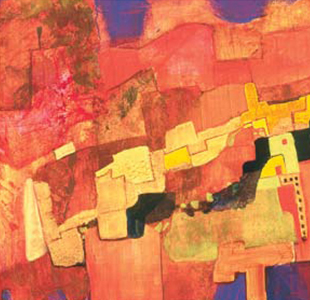
What sets Pilgrimage apart is not simply its beauty; it’s the layers of meaning it holds. In the first section I share where I went, what I saw, what I did, what I gave, what I received. This is done through photographs, maps and brief contextual material.


The second section displays amazing color reproductions of the 17 paintings in my Pilgrimage exhibition. Two sentence blurbs invite the reader to explore each work of art.

Anecdotal stories that accompany the paintings comprise the third section of the book. Each story has color details cropped from the painting it narrates. This makes it easy for the reader to move back and forth between stories, paintings, and photographs.


In gratitude for the many persons who have assisted in bringing this dream into reality, I am making 75 copies of this private edition available to followers of my blog at the printing cost of $17.50 plus shipping.

Of course, I’m hoping those who get Pilgrimage at the special private edition price will fall in love with it and encourage people to buy the retail edition when it comes out in the fall. 

Monday, May 30, 2011

Dream Deferred


My necklace broke. Beads spilled and bounced down the stairs. They rolled into nooks and crannies that my fingers could not reach. I sat on a step and cried. Waking from this dream twenty-five years ago, I knew at a wrenching gut level that the project upon which I had embarked would not come together.

I had read and reread pieces written in brief workshops I’d conducted while on the road doing fundraising. Surveys from colleagues who had worked in community development projects told of drip irrigation that made a desert bloom, shrimp farms that tripled family incomes, and healthcare workers who reduced infant mortality. But something was missing. I could not grasp the story that needed to be written. Where was the string to hold these precious jewels?


Concluding that I was not skilled enough as a writer, I resolved to learn to write in a way that made people, places and events come alive on the page. I imagined that a writing workshop with Vivian Gornick would be the magic pill I needed. I was wrong. Each workshop and writing venture led to another.

As I pursued my ambition of becoming a writer, my daughter became an artist. I began taking art classes so I could converse with and encourage her. With no forethought or planning, I fell in love with the creative process of using paper and pigment to express my inner world. I moved back and forth between visual creations that unleashed sensory memories words could not capture and my conscious struggle to become a writer. 

I had a column and wrote feature articles for a magazine in British Columbia. I finished an unpublished memoir that helped me separate my identity from that of the organization for which I had worked. I published poems, wrote unaccepted book proposals, edited journals and newsletters, and completed a manuscript on women’s empowerment.

And always I journaled, hoping that I would stumble upon the story of what had so profoundly moved me in my work with impoverished communities  – the unwritten story that launched me on the quest to become capable of telling my truth so others could grasp it. 

My daughter died and I grieved.


Just as I was accepted to do a master’s degree I met Katherine Chang Liu, an Asian American abstract artist who grew up in Taiwan. Unlike other artists with whom I’d studied, and there were many, Liu was not peddling tricks and techniques. She sought to reach into each artist’s heart and unleash her personal vision. I made a date with Liu to study with her two and a half years in the future.

A master’s degree in literary non-fiction did not make me a book author. Perhaps writing was not my destiny. Returning to brushes and paint, I kept my date with Liu. Arriving at the open studio, I knew exactly what I wanted to paint – Third World villages that had imprinted themselves upon my heart and psyche. Prodded by Liu, visual memories tumbled easily from pencil to sketchbook. Colors to express my feelings swam before my eyes. Within two years the village series was well underway. 


When no local gallery wanted to show the work, I became discouraged. Liu would not accept despair. “Do the work. Send me slides so I can show others what can happen if they undertake a series of paintings with a sincere purpose. And you’d better send me some of those stories you tell about each village painting so I know what I’m talking about when I show the slides.”

So the stories began to be written. An anecdote and a poem were retrieved from the beginning of my writing quest. A feature story was abbreviated. As memories were recorded, a few paintings that had slipped out unconsciously were recognized as part of the village series. Liu suggested the material I’d sent hinted of an exhibition proposal. Colleagues pushed me to figure out how to position the work and where to submit proposals.

Pilgrimage: Wonder, Encounter, Witness was born - seventeen paintings and anecdotal stories that express the wonder of places where I lived, encounters that forced me to examine who I am, and the amazing courage and ingenuity I witnessed in the people I met. Three exhibitions hit the calendar, back to back. One gallery wanted photographs and artifacts, so I reached out to former colleagues and they responded. Each exhibition was a milestone.


But Liu was not done with me. “LiDoña, don’t you think there should be a book? I mean, shouldn’t you take Pilgrimage beyond Oregon, and don’t you think you need a book to do that?” Oh my god, do you really want me to do that? Well, all right, since I have all the contents, I might as well. It will be a nice memento for my granddaughters.

Nine months later, as the graphic designer and I prepare to send my book of paintings and stories to the printer, I wake from a dream and it hits me. This is the book I wanted to write twenty-five years ago. A few precious beads have been strung. The missing string was Pilgrimage – a sacred journey to honor the mystery found in every place, person, and culture.


Photographs by Bruce Robertson, David Zahrt, Tim Lush, Gloria Santos, Walt O'Brien

Friday, April 29, 2011

“Wicked” Myth Making


Have you seen the stage play Wicked, a prequel to the Wizard of Oz? It “explains” how the Tin Man lost his heart, the Lion lost his courage, the Scarecrow lost his brain, and the Witch of the West came to be called “Wicked”. It’s about myth making in the negative sense - how lies, deceit, and popularity become confused with history. You might see shades of Sara Palin and the Tea Party. Here’s a quick recap.
Elphaba, Witch of the West, is born with green skin. She suffers the sticks and stones hurled at those who are different, especially those who possess extraordinary powers such as she has.  When her school’s history teacher, a goat, is caged and forced to stop speaking and teaching, Elphaba gets angry and lets loose some of her power. The headmistress, Madame Morrible, is so impressed that she decides to take Elphaba to meet the Wizard of Oz.
Glinda, Witch of the North, is an egotistical, self-righteous, goody two-shoes whose mission in life is to be the most popular person on the planet. She tags along with Elphaba to meet the Wizard.
The Wizard gives Elphaba a book of spells and goads her into reading and using one of them. Elphaba discovers that the Wizard is all smoke and mirrors and that she has greater powers than either the Wizard or Madame Morrible. The Wizard tries to placate her by telling her there is no truth; history is just what a lot of people agree to believe.
At this point Elphaba decides to leave the Wizard and free the caged and muzzled animals in Oz. The Wizard imprisons her and Glinda. Elphaba decides to defy gravity and fly free. She invites Glinda to join her, but Glinda is afraid and refuses. Elphaba grabs a broom and rises up. She sings my favorite song, “Defying Gravity.” Elphaba flies freely and goes about Oz releasing the animals. This provokes the Wizard, Madame Morrible, and the people of Oz to call her “Wicked.”
Meanwhile Glinda announces to Oz that she and Fiyero are engaged to be married. Fiyero is shocked. He is in love with Elphaba and has not asked Glinda for her hand.  When Fiyero goes searching for Elphaba, Glinda gives the Wizard and Madame Morrible information that leads to the death of Elphaba’s sister Nessarose, Witch of the East, (the one with the red slippers) and the capture of Elphaba.
The people of Oz think they have succeeded in killing Elphaba and Fiyero, but the couple actually escape and go underground. Glinda, deceitful but popular, is crowned “Good” Witch of the North. Elphaba, who understood the importance of nature and set about caring for it, is forever known as the “Wicked” Witch of the West.
Truth is often trampled underfoot and forced to go underground. There it gathers energy and erupts in surprising ways, much like current movements for democracy in the Middle East.

Tuesday, March 29, 2011

Visions of Hope

What if, just as you were ready to enter high school, there were a drought in your region of the world and your family didn’t have money for the regulation shoes or mandatory fees? What if the only library near you was a room with used textbooks from the United States? What if the drought created a famine and the famine were accompanied by an outbreak of cholera?

Faced with these mind-numbing circumstances, William Kamkwamba of Malawi, a poor country in Southern Africa, did what others only talk about – he became the change he hoped to see in the world.

It began when William saw a picture of a wind farm in an old text book. Intrigued by the picture, he attempted to read some of the English words surrounding the picture. That smattering of words gave him a vision of possibility – wind power could create electricity and pump water from a well. Inspired by this vision, William decided to build a windmill.

Despite never having built anything of scale, having no supplies, and knowing nothing about electricity, he set about his task. When others saw William combing through the junkyard in search of usable materials, they labeled him a madman and treated his family with derision. Yet William persisted and his father, though not understanding William’s vision, gave him time from fieldwork to keep tinkering away.

Day by day he found pictures in the textbook and deciphered words related to each image, gradually conquering one concept after another. For each mechanical device necessary for the windmill, he drew models on pieces of scratch paper. Mounds of junk covered the dirt floor of his room. Sections of the windmill began to take shape. Flattened PVC pipes became the blades. Bicycle spokes, bent and twisted, served multiple purposes.


His friend Geoffrey, the chief’s son, saw William painstakingly creating nuts and bolts from old nails. To erase hours of such labor, Geoffrey went to the general store and bought William a bag of nuts and bolts. William’s friend Gilbert suffered from anemia that caused his legs to swell from malnutrition during the famine, yet he steadfastly helped William and believed in the dream of a windmill that could generate electricity for lights and pump water for irrigation.

What so deeply inspires me about William’s story is his passionate desire to learn. When he couldn’t go to school, he tackled an enormous problem that forced him to learn on his own. I associate that same passion with Abraham Lincoln, who as a young man would walk miles to borrow a book that he would read by candlelight. I’m not going to tell you how this story ends but I will give you a clue. You can see William and his windmill on TED. I hope you will read The Boy Who Harnessed the Wind and be inspired to create your own “windmill,” your vision of hope for your community.

Saturday, February 26, 2011

Simple, Simple, Simple

I did it! I did a home yoga practice for 21 days straight with the help of Yoga Journal. Then I did another 21 days all on my own. And ... I’m still doing it.

In early January I saw an article in Yoga Journal announcing a home yoga practice challenge January 10 through January 30. The article was intriguing, but I was doubtful. Then I found the two-page spread on a “simple everyday practice” by Kate Holcombe. I noticed right away that there were no down dogs, back bends, or hand stands. It was all done lying or kneeling on the floor – simple – simple - simple.
I cut out the spread, taped it into a file folder for easy reference, and gave it a whirl. It was primarily spine, leg, and arm stretches. It was just what it said - simple. Afterward, relaxed and refreshed, I signed up for the challenge.

The first issue was, WHEN am I going to do this? I had imagined doing it first thing in the morning. But I already have a morning journal writing practice that occurs before breakfast and dressing for work. I knew trying to get up earlier was not going to work for me. Then I realized that I go to a yoga studio two nights a week after work. I decided on the days I didn't go to the yoga studio I would do the home practice immediately upon arriving home from work.

During the challenge, I received a daily email with a 20-45 minute video.  At first I tried to watch the video and then do the sequence. But it was too hard to remember all the poses, so I switched to setting my laptop on the floor and following along with the instructor. After one 45-minute sequence, I determined that 30 minutes would be my maximum. Since all previous videos were still available, if the one for a particular day seemed too much, I would repeat one that had worked well for me. There were plenty of down dogs and sun salutations, but no backbends or hand stands.

During the 21 Day Challenge, I found that the daily yoga practice became a ritual for marking the end of my workday and the beginning of my personal time. I remembered how years before, when I was teaching in Singapore, I would arrive home in the heat of the afternoon and take a shower to mark the conclusion of my workday.


When the challenge ended I had enough momentum to keep up a daily practice using Kate Holcombe’s twenty-minute sequence. After about a month, I began to notice a decrease in the pain and stiffness I have had in my right arm and shoulder for over a year. That victory has spurred me on. I am now committed to maintaining an ongoing SIMPLE everyday practice.


Sunday, January 30, 2011

Mystery


Birth is a mystery. Life is a mystery. Death is a mystery. When we stand present to these realities we experience awe.

Green leaves of summer turned red and gold, fell from their branches, and were replaced by falling snow as one of my dear friends fought an aggressive cancer. Three weeks ago the cancer took a final ferocious  turn.

For the last twelve days of her life, almost a hundred colleagues joined our friend in an around the clock and around the world prayer vigil, giving her support and comfort. Set to New York time, colleagues in Australia, Malaysia, Taiwan, Japan, India, Africa, Italy, Canada, Costa Rica. Mexico, and all across the United States selected an hour in which to pray or mediate with our friend and send her uplifting energy.

At every hour of each day there were three to nine persons accompanying our friend by lighting candles, singing songs, ringing bells, saying prayers, repeating mantras, clapping hands, remembering her gifts to humanity, meditating, and sitting in silence.


As our friend’s time for transition to pure spirit drew near, her husband requested that we send short prayers, brief poems, and messages to be read aloud to her. Via email, an amazing collection from varied traditions and cultures was compiled and sent to New York. The global vigil continued.

On the morning of the final day of her transition, with family and closest friends assembled around her bed, the reading began. Throughout the day, names evoked memories, prayers occasioned wonder, poems released tears, phone messages brought smiles, and hand holding gave comfort. Late in the afternoon, a friend arrived to give Reiki and to guide a meditation.

Both my friend and her husband were transported into awe. Each experienced that, “Darkness is just a curtain and when the curtain is pulled aside all that exists is Light, Energy, and Pulsation.”

A few hours later, embraced by her husband and lifted up on a wave of love, my friend slipped quietly away to become one with Infinity. Those who accompanied her on the journey are filled with the extraordinary lightness of her new being. Mystery is everywhere.